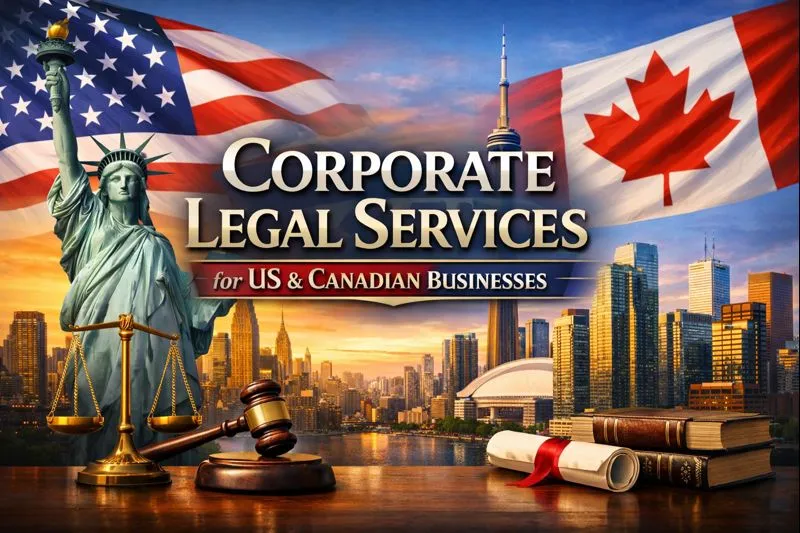
Corporate Legal Services for US and Canadian Businesses: A Complete Guide for Modern Enterprises
In today’s highly regulated and fast-moving business environment, corporate legal services are no longer a luxury—they are a necessity. Whether a company is a startup in Silicon Valley, a mid-sized manufacturer in Ontario, or a multinational enterprise operating across North America, strong legal support plays a critical role in protecting assets, ensuring compliance, managing risk, and enabling sustainable growth.
For businesses operating in the United States and Canada, the legal landscape can be particularly complex. Each country has its own corporate laws, tax regulations, employment standards, intellectual property protections, and compliance frameworks. Navigating these rules without professional legal assistance can expose businesses to lawsuits, fines, reputational damage, and operational disruptions.
This in-depth guide explores corporate legal services for US and Canadian businesses, explaining what they include, why they matter, and how companies can leverage them for long-term success. Whether you are an entrepreneur, business owner, executive, or investor, this article will help you understand the value of corporate legal services and how to choose the right legal partner.
1. Understanding Corporate Legal Services
Corporate legal services refer to professional legal support provided to businesses throughout their lifecycle. Unlike individual legal services, corporate law focuses on organizations, their structure, operations, contracts, compliance obligations, and relationships with stakeholders.
These services cover everything from company formation and governance to mergers, acquisitions, litigation management, and regulatory compliance.
Key Objectives of Corporate Legal Services
The primary goals of corporate legal services include:
- Protecting the legal interests of a business
- Ensuring compliance with federal, state, provincial, and local laws
- Minimizing legal and financial risks
- Supporting strategic growth and expansion
- Resolving disputes efficiently
- Safeguarding intellectual property and confidential information
For US and Canadian businesses, corporate legal services often require cross-border expertise due to differences in laws and regulations between the two countries.
2. Why Corporate Legal Services Are Essential for Businesses
Many businesses initially underestimate the importance of corporate legal services. However, legal challenges can arise at any stage of a company’s journey—from incorporation to expansion, restructuring, or exit.
2.1 Risk Management and Prevention
One of the most significant benefits of corporate legal services is risk prevention. Lawyers identify potential legal issues before they escalate into costly disputes. This includes reviewing contracts, ensuring regulatory compliance, and advising on corporate governance.
2.2 Regulatory Compliance
Both the US and Canada have strict regulatory frameworks governing businesses. Non-compliance can result in penalties, lawsuits, or even forced shutdowns. Corporate legal professionals ensure that companies comply with:
- Corporate laws
- Tax regulations
- Employment standards
- Data protection laws
- Industry-specific regulations
2.3 Business Growth and Expansion
As businesses grow, legal complexity increases. Corporate lawyers help companies expand into new states, provinces, or countries by ensuring compliance with local laws and managing cross-border legal requirements.
2.4 Protection from Legal Disputes
When disputes arise, corporate legal services provide representation, negotiation, and litigation support. Having legal counsel already familiar with the business ensures faster and more effective resolution.
3. Corporate Legal Systems in the United States and Canada
Understanding the legal frameworks of both countries is essential for businesses operating in North America.
3.1 Corporate Law in the United States
The US legal system is based on federal and state laws. While federal laws govern areas like securities, antitrust, and employment discrimination, state laws primarily regulate company formation and governance.
Key features include:
- Corporations are incorporated at the state level
- Delaware is a popular incorporation state due to business-friendly laws
- Strong emphasis on shareholder rights
- Extensive litigation culture
3.2 Corporate Law in Canada
Canada has a dual system of federal and provincial corporate laws. Businesses can choose to incorporate federally or provincially.
Key characteristics include:
- Federal incorporation under the Canada Business Corporations Act (CBCA)
- Provincial incorporation under acts such as the Ontario Business Corporations Act (OBCA)
- Generally less litigation compared to the US
- Strong emphasis on regulatory compliance and fairness
3.3 Cross-Border Considerations
Businesses operating in both the US and Canada must comply with the laws of each jurisdiction. Corporate legal services help manage cross-border issues such as:
- Taxation and transfer pricing
- Trade compliance
- Employment laws
- Intellectual property protection
- Data privacy regulations
4. Company Formation and Business Structuring
One of the most fundamental corporate legal services is assisting with business formation and structure.
4.1 Choosing the Right Business Entity
Corporate lawyers help businesses choose the most suitable legal structure, such as:
- Sole proprietorship
- Partnership
- Limited Liability Company (LLC)
- Corporation (C-Corp or S-Corp in the US)
- Federal or provincial corporation in Canada
Each structure has different implications for taxation, liability, governance, and fundraising.
4.2 Incorporation and Registration
Legal professionals handle the preparation and filing of incorporation documents, ensuring compliance with state, provincial, or federal requirements.
4.3 Shareholder and Partnership Agreements
Clear agreements help prevent disputes among founders, partners, or shareholders. Corporate legal services ensure that these agreements address:
- Ownership percentages
- Voting rights
- Profit distribution
- Exit strategies
- Dispute resolution mechanisms
5. Corporate Governance and Compliance
Strong corporate governance is essential for long-term stability and investor confidence.
5.1 Board of Directors and Officers
Corporate lawyers advise on:
- Board composition
- Fiduciary duties
- Decision-making processes
- Conflict of interest policies
5.2 Corporate Policies and Bylaws
Well-drafted bylaws and internal policies provide clarity and reduce legal risks. These include:
- Code of conduct
- Ethics policies
- Whistleblower policies
- Compliance manuals
5.3 Regulatory Filings and Reporting
US and Canadian businesses must file annual reports, tax documents, and other disclosures. Corporate legal services ensure accurate and timely filings.
6. Contract Drafting and Management
Contracts are the backbone of business operations. Poorly drafted agreements can lead to disputes, losses, and legal exposure.
6.1 Types of Business Contracts
Corporate legal services cover a wide range of contracts, including:
- Commercial agreements
- Vendor and supplier contracts
- Employment contracts
- Non-disclosure agreements (NDAs)
- Licensing agreements
- Franchise agreements
6.2 Contract Review and Negotiation
Experienced corporate lawyers review contracts to identify risks, negotiate favorable terms, and ensure enforceability.
6.3 Cross-Border Contracts
US-Canada cross-border contracts require careful drafting to address jurisdiction, governing law, currency, and tax considerations.
7. Employment and Labor Law Services
Employment laws in the US and Canada are complex and constantly evolving.
7.1 Employment Contracts and Policies
Corporate legal services help draft compliant employment agreements and workplace policies.
7.2 Compliance with Labor Laws
Lawyers ensure compliance with:
- Minimum wage laws
- Overtime regulations
- Workplace safety requirements
- Anti-discrimination laws
7.3 Handling Workplace Disputes
Legal professionals assist in resolving disputes related to wrongful termination, harassment, or labor union issues.
8. Intellectual Property Protection
Intellectual property (IP) is often one of a company’s most valuable assets.
8.1 Types of Intellectual Property
Corporate legal services cover protection of:
- Trademarks
- Patents
- Copyrights
- Trade secrets
8.2 IP Registration and Enforcement
Lawyers assist with registering IP rights in the US and Canada and enforcing them against infringement.
8.3 IP in Mergers and Acquisitions
During acquisitions, legal professionals ensure that IP assets are properly transferred and protected.
9. Mergers, Acquisitions, and Business Transactions
Corporate legal services play a critical role in mergers and acquisitions (M&A).
9.1 Due Diligence
Lawyers conduct thorough due diligence to identify legal risks before transactions are completed.
9.2 Structuring Transactions
Legal experts help structure deals in a way that minimizes tax liabilities and legal exposure.
9.3 Regulatory Approvals
Certain transactions require approval from regulatory authorities in the US or Canada.
10. Litigation and Dispute Resolution
Despite best efforts, disputes can arise in any business.
10.1 Commercial Litigation
Corporate legal services include representation in court for contract disputes, shareholder conflicts, and other commercial issues.
10.2 Alternative Dispute Resolution
Many businesses prefer arbitration or mediation to resolve disputes quickly and cost-effectively.
10.3 Cross-Border Disputes
US-Canada disputes require lawyers with experience in international law and jurisdictional issues.
11. Tax and Financial Legal Services
Tax laws are among the most complex aspects of running a business.
11.1 Corporate Tax Planning
Corporate lawyers work with tax professionals to optimize tax structures.
11.2 Cross-Border Tax Issues
Businesses operating in both countries must address double taxation and transfer pricing.
11.3 Compliance and Audits
Legal services help businesses prepare for audits and resolve tax disputes.
12. Data Privacy and Cybersecurity Compliance
Data protection has become a critical legal issue for businesses.
12.1 US Data Privacy Laws
US businesses must comply with federal and state-level data protection laws.
12.2 Canadian Data Privacy Regulations
Canadian businesses are subject to strict privacy laws governing personal data.
12.3 Cybersecurity Risk Management
Corporate legal services help develop policies and respond to data breaches.
13. Industry-Specific Corporate Legal Services
Different industries face unique legal challenges.
13.1 Technology and SaaS Companies
Legal services cover licensing, IP protection, and data compliance.
13.2 Healthcare and Life Sciences
Compliance with healthcare regulations is critical.
13.3 Finance and Fintech
Financial institutions require legal support for regulatory compliance and risk management.
14. Choosing the Right Corporate Legal Services Provider
Selecting the right legal partner is crucial.
14.1 Experience and Expertise
Look for firms with experience in US and Canadian corporate law.
14.2 Industry Knowledge
Industry-specific expertise adds significant value.
14.3 Cost and Fee Structure
Understand billing models, including hourly rates and retainers.
14.4 Long-Term Partnership
A good corporate lawyer acts as a strategic advisor, not just a problem-solver.
15. The Future of Corporate Legal Services in North America
The corporate legal landscape is evolving rapidly.
15.1 Technology and Legal Automation
Legal technology is improving efficiency and reducing costs.
15.2 Increasing Regulatory Complexity
Businesses must stay ahead of changing laws.
15.3 Demand for Cross-Border Expertise
As globalization continues, cross-border legal services will become even more important.
Conclusion
Corporate legal services for US and Canadian businesses are essential for navigating today’s complex legal environment. From company formation and governance to contracts, employment law, intellectual property, and dispute resolution, legal professionals play a vital role in protecting businesses and supporting growth.
For companies operating across borders, experienced corporate legal services provide clarity, confidence, and compliance. By investing in strong legal support, businesses can reduce risk, improve efficiency, and focus on what matters most—building a successful and sustainable enterprise.